What Fabric Should You Use for an Oversized Square Neck Tank Top? A Complete Sewer's Guide

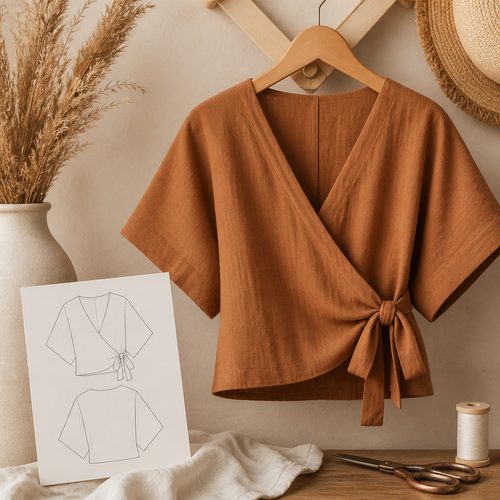
Boho Wrap Top Pattern, $4.99. Instant download, A4 and US Letter.
See the pattern
What fabric should I use to sew an oversized square neck tank top?
Why Fabric Choice Makes or Breaks a Square Neck Tank Top
The square neckline is one of those design details that looks effortlessly chic in the right fabric and hopelessly off in the wrong one. Because the neckline is geometric and flat, it needs a fabric with enough body to lie cleanly across the chest without gaping or rolling inward, yet enough drape to move naturally with the body. Wide straps compound this challenge: they are wide enough to function as a visible design element, so a fabric that twists, puckers, or distorts under tension will undermine the entire silhouette. For an oversized fit specifically, fabric weight determines whether the finished garment reads as intentionally relaxed or simply ill-fitting — lighter, drapey fabrics tend to fall beautifully on looser cuts, while stiff or heavy fabrics can make the same pattern look shapeless. Getting the fabric right from the start saves you from frustrating rework and ensures the pattern performs exactly as it was designed to.
The Best Fabrics for a Relaxed, Oversized Square Neck Tank Top
Rayon jersey, also sold as viscose jersey, is widely considered the gold-standard choice for this style: it drapes like liquid, stays cool against the skin, and gives wide straps a smooth, polished appearance with minimal effort. Cotton-Lycra jersey — typically 95% cotton and 5% spandex — is a close second because it has more recovery than pure rayon, holds its shape through repeated washing, and is beginner-friendly since it does not slip on the cutting mat. Modal fabric offers an ultra-soft hand feel with excellent drape, making it ideal when you want the finished top to feel luxurious and breathable for warm-weather wear. TENCEL or lyocell jersey is a strong sustainable option with a silky surface and outstanding moisture-wicking properties, particularly suited to spring and summer sewing projects. For sewers who strongly prefer woven fabrics, a very lightweight linen or linen-cotton blend can work if the pattern already includes generous ease and you are willing to add a button or tie closure, since wovens lack the stretch-to-fit quality that most tank top patterns rely on.
Knit vs. Woven: Understanding What Your Pattern Is Drafted For
Sewing patterns for tank tops — including this oversized square neck style — are almost universally drafted for knit fabrics, meaning the ease and seam allowances assume the fabric will stretch to fit the body. If you substitute a woven fabric without adjusting the pattern, you may find the garment too narrow to pull over your head, or that the neckline pulls in unexpected directions because there is no give to distribute the tension. The key metric to verify is stretch percentage: most knit tank top patterns require at least 50% horizontal stretch, meaning a 10-inch section of fabric should stretch to at least 15 inches with moderate hand tension. Patterns for a more relaxed, oversized silhouette are typically more forgiving and may work with fabrics in the 50–75% stretch range, while tighter-fitted styles push toward 75–100%. Before cutting into your fashion fabric, always hold a 4-inch swatch of your chosen knit against the stretch gauge printed on the pattern instruction sheet to confirm compatibility — this 10-second check can save you an entire yard of wasted fabric.
Fabric Weight and Drape: Getting the Wide Straps and Neckline Right
Fabric weight is measured in grams per square meter (GSM), and for an oversized square neck tank top, a weight of roughly 160–220 GSM tends to hit the sweet spot between structure and drape. Below 160 GSM the fabric is lightweight and beautifully flowy, but the wide straps may lack enough substance to lie flat and could require a self-fabric lining layer to prevent sheerness. Above 220 GSM the material begins to feel more like activewear or sweatshirt fabric — warm and substantial, which can work well for a layering piece in cooler months, but may feel heavy and stiff for a summer top. For the square neckline specifically, you want a fabric that has just enough body to hold the flat geometric line across the chest without curving or sagging, yet is not so rigid that it creates an uncomfortable band. A simple drape test can help you decide: hold one corner of your fabric swatch and let it fall freely — fabric with the right drape for this style will cascade smoothly downward rather than sticking out at a horizontal angle.
Pre-Washing and Preparing Your Fabric Before You Cut
Pre-washing is non-negotiable for any fabric that will be machine-washed after sewing, and it is especially critical for natural fibers like cotton and rayon that can shrink noticeably on the first wash. Launder your yardage in the same way you plan to wash the finished garment — typically a cold or warm machine cycle — then tumble dry on low or line dry, matching your intended care routine from day one. Once dry, give the fabric a gentle steam press before cutting, being careful not to drag or stretch knit fabrics with the iron since heat plus tension can permanently distort the grain. Pay close attention to grain line before pinning your pattern pieces: for knit tank tops, the greatest stretch should run horizontally across the body, not vertically, so the neckline and hem retain their shape over time and do not grow longer with wear. Cutting on the fold is standard for tank top patterns, so align your selvages carefully and smooth the fabric flat before placing pattern pieces to avoid any off-grain cutting that would cause twisting in the finished seams.
How Much Fabric Do You Need? A Yardage Guide by Size
Yardage requirements vary by body size and fabric width, but the following estimates are reliable for fabric that is 58–60 inches wide, the most common width for jersey knits sold by the yard. For sizes XS through Small, budget approximately 1.5 to 1.75 yards; for Medium through Large, plan on 1.75 to 2.25 yards; for XL through 2XL and beyond, purchase 2.25 to 2.75 yards to give yourself comfortable room for pattern placement and any cutting mistakes. If your fabric is only 44–45 inches wide — less common for jersey but it does happen with some cotton-Lycra blends and specialty fabrics — add an extra half-yard to each of those estimates. For prints with a large repeat you want to match at the side seams or center front, add another quarter to half-yard as a buffer so you have flexibility in placement. Buying slightly more than the calculated minimum is always the safer choice: a leftover remnant can be used to test stitch tension, practice seam finishes, or make a future repair, while running short mid-project often means an impossible dye-lot match at the fabric store.
Key Takeaways
- Rayon jersey and cotton-Lycra jersey are the top two fabric choices for this style, offering ideal combinations of drape, recovery, and beginner-friendliness.
- This pattern is drafted for knit fabrics — confirm your fabric stretches at least 50% horizontally before cutting by testing against the pattern's stretch gauge.
- A fabric weight of 160–220 GSM keeps wide straps lying flat and the square neckline holding its geometric shape without feeling stiff.
- Four-way stretch fabrics offer the most forgiveness when sewing curved armhole seams and are especially recommended for first-time garment sewers.
- Always pre-wash fabric before cutting to eliminate post-sewing shrinkage, particularly with rayon and cotton, which are prone to significant shrinkage.
- For 58–60-inch-wide fabric, plan on 1.5–2.75 yards depending on your size; add extra yardage for narrow fabric widths or large print repeats.