How to Sew a Square Neck Side-Gathered Midi Dress (Sizes 0–30): Complete Pattern Guide

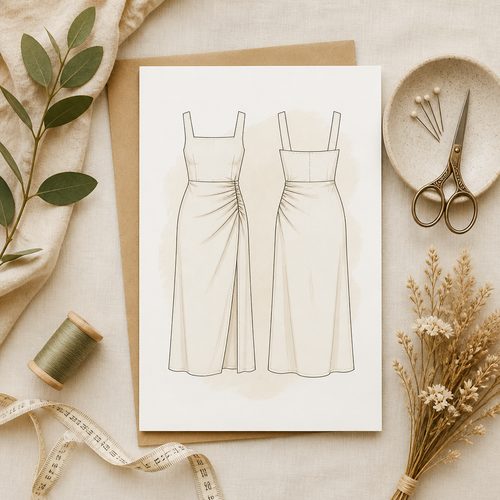
Midi Dress Sewing Pattern, $4.99. Instant download, A4 and US Letter.
See the pattern
How do I sew a square neck midi dress with side gathering?
What Is a Square Neck Side-Gathered Midi Dress?
A square neck side-gathered midi dress combines two of the most flattering design features in women's dressmaking: a structured, geometric neckline and soft, draped gathering along the side seams. The square neckline frames the collarbone and décolletage with clean horizontal and vertical lines, giving the bodice a polished, intentional look that works equally well for casual outings and formal events like weddings or proms. The side gathering is sewn into the skirt panel seams rather than the center front or back, which creates a subtle, asymmetric drape that skims the body without clinging. Because the fullness is distributed through the side seams, the silhouette remains streamlined from the front and back views while still offering ease of movement. The midi length — typically falling between the knee and ankle — adds an elegant, elongating effect that suits a wide range of body types and occasions.
Materials and Fabric Recommendations
For the best results with a side-gathered midi dress pattern, choose a fabric with enough drape to allow the gathering to fall softly rather than puff stiffly. Lightweight woven fabrics such as rayon challis, cotton lawn, viscose, or a fluid crepe de chine are ideal because they gather smoothly and hang with a natural, relaxed weight. Avoid stiff fabrics like quilting cotton or canvas, as they will cause the gathered panels to stand out from the body rather than flow gracefully. For the bodice and square neckline, a fabric with slight body — such as a medium-weight cotton-linen blend or a ponte knit if the pattern is designed for stretch — helps the neckline hold its shape without needing heavy boning or interfacing. You will also want a 1–2 yard length of lightweight woven interfacing to stabilize the neckline facing and prevent the square edges from stretching out during wear and washing.
Understanding the Size Range: Sizes 0–30 Explained
This pattern is drafted to cover sizes 0 through 30, which is one of the broadest inclusive size ranges available in modern indie sewing patterns. Sizes in commercial sewing patterns do not correspond directly to ready-to-wear clothing sizes, so it is essential to take your full bust, waist, and high hip measurements before selecting a size — the pattern's measurement chart is the only reliable guide. If your measurements fall between two sizes, choose the larger size for the bust and taper through the waist and hip using a simple blending technique, drawing a smooth line between the printed cutting lines. For curvier figures in the higher size range (16–30), the side-gathered design is particularly flattering because the gathering releases extra ease through the hip and thigh without adding bulk at the waistline. Sewists who are new to fitting larger sizes should also consider making a muslin toile first using inexpensive fabric, which allows you to adjust the bodice length, shoulder width, or skirt length before cutting into your final material.
Step-by-Step: Constructing the Square Neckline
The square neckline is typically the trickiest element of this dress to sew cleanly, and the key is precision at the corners. Begin by cutting the bodice front and the neckline facing on the straight grain as indicated on the pattern pieces, then apply lightweight interfacing to the wrong side of the facing before sewing. When you stitch the facing to the bodice along the neckline edge, sew directly through all layers and pivot your needle exactly at each corner, taking one or two diagonal stitches across the corner point to allow the seam allowance to turn smoothly rather than bunching. Clip the seam allowance into the corners — cutting almost but not quite to the stitching line — before understitching the facing to the seam allowance, which prevents the facing from rolling to the outside during wear. Press the neckline firmly with a clapper or tailor's ham after understitching, pulling the corners gently into crisp right angles; a pressing cloth and steam will help set the shape permanently without scorching delicate fabrics.
Step-by-Step: Sewing the Side Gathering
The side gathering is sewn using long basting stitches — typically two parallel rows at a stitch length of 4–5mm — placed within the seam allowance along the designated gathering sections of the side skirt panels. Once the basting rows are complete, pull gently on the bobbin threads from both ends simultaneously to ease the fabric into gathers, distributing the fullness evenly along the seam rather than bunching it at one end. Pin the gathered edge to the corresponding flat panel at regular intervals — roughly every inch — before sewing the seam at your standard stitch length, sewing with the gathered layer on top so you can control the folds as they feed through the machine. After sewing, remove the visible basting stitches and press the seam allowances toward the flat (ungathered) panel to reduce bulk and help the side seam lie smoothly against the body. If you want a more refined finish on the inside, serge or French-seam the side seams before assembly so the gathers remain clean and the dress lasts through many washes without fraying.
Styling a Square Neck Midi Dress for Every Occasion
One of the greatest strengths of the square neck side-gathered midi silhouette is its versatility across dress codes. For a summer garden party or bridal shower, choose a floral rayon and pair the finished dress with block-heeled mules and simple gold earrings — the square neck is the natural focal point, so keep jewelry minimal. For a more casual daytime look, sew the pattern in a striped linen, leave the sleeves short, and style with white sneakers or flat sandals. As a wedding guest dress or prom alternative, a fluid satin or matte crepe in a jewel tone elevates the design to formal territory without requiring any pattern modifications. The midi length also makes it an excellent base for layering: add an oversized blazer or a fitted turtleneck underneath for transitional-season styling that extends the dress through fall and early spring.
How to Download and Print a Digital Sewing Pattern
This pattern is sold as a digital PDF download, which means you receive the files immediately after purchase and can print and use them as many times as needed. After downloading, open the PDF in Adobe Acrobat Reader (the free version works perfectly) and print the tiling pages at 100% scale — never use 'fit to page,' which will shrink the pattern pieces and throw off all measurements. Each page will include a 1-inch or 2-cm test square that you must measure on your printed sheet before cutting; if it matches, your scale is correct. Assemble the tiling pages by trimming the margins on two sides and overlapping the pages at the crop marks, then taping them together on a flat surface to form the full-size pattern pieces. Alternatively, many digital patterns also include an A0 copyshop file that can be printed at a print shop on large-format paper in a single sheet, which saves assembly time and is worth the small printing fee for complex multi-piece patterns like a dress.
Get the Pattern: Craftuary
The Midi Dress Sewing Pattern with Square Neck and Side Gathering in sizes 0–30 is available as an instant digital download from Craftuary. Craftuary is a premium digital download shop offering patterns, templates, and creative resources across a wide range of categories — all designed to be immediately usable and professionally formatted. At a price point of around $13–$15, a digital sewing pattern offers exceptional value compared to printed patterns, since you receive permanent access, can re-print pieces at any time, and never pay for shipping. This particular pattern is well suited for sewists ranging from advanced beginners to experienced dressmakers, and the inclusive size range from 0 to 30 means you can use a single purchase to sew dresses for multiple people in your household. Visit the listing at shopcedarcompass.com or search Craftuary to download your copy and start sewing today.
Key Takeaways
- A square neck side-gathered midi dress features a structured geometric neckline and soft side-seam gathering for a flattering, versatile silhouette.
- Choose lightweight woven fabrics like rayon challis, viscose, or cotton lawn for smooth gathering and natural drape.
- Always measure your full bust, waist, and high hip and compare to the pattern's size chart — do not rely on ready-to-wear clothing sizes.
- Clip corners precisely and understitch the square neckline facing to achieve sharp, clean corners that hold their shape.
- Pull both basting threads simultaneously when gathering side panels to distribute fullness evenly before sewing the final seam.
- Print PDF patterns at exactly 100% scale and verify the printed test square before cutting any fabric.
- The size 0–30 range makes this pattern one of the most inclusive options available for women's dress sewing.
- This digital pattern is an instant download from Craftuary, reusable and never out of stock.