What Fabric Works Best for an Asymmetrical Wrap Top Sewing Pattern?

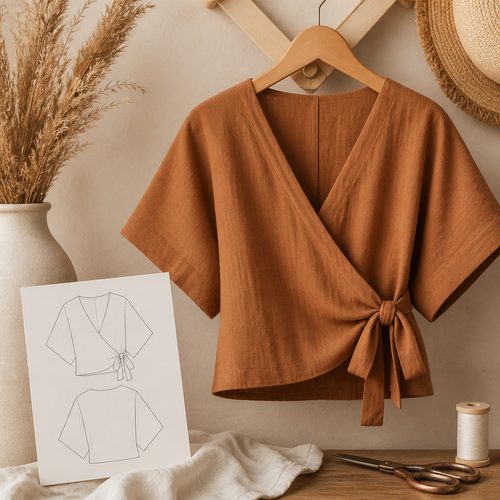
Boho Wrap Top Pattern, $4.99. Instant download, A4 and US Letter.
See the pattern
What is the best fabric for sewing an asymmetrical wrap top or overlap blouse?
Why Fabric Choice Is More Important for Wrap Tops Than Most Other Styles
Unlike a structured button-down or a fitted knit top, a wrap or overlap blouse depends almost entirely on its fabric to create the right drape, movement, and silhouette. The asymmetrical overlap front on this style of blouse needs to fall softly across the body rather than sticking out stiffly — if your fabric is too crisp or too heavy, the overlap panel will gape or pucker instead of lying flat and fluid. Wrap tops also typically involve bias-cut edges, ties, or angled hemlines that behave very differently depending on fiber content and fabric weight. Choosing the wrong material can mean hours of sewing effort that results in a top that just doesn't hang the way the pattern photo shows. Getting fabric selection right before you cut a single piece is the single most impactful decision you will make for this project.
Linen: The Gold Standard for Minimalist Overlap Blouses
Linen is the recommended fabric for this style of asymmetrical wrap top for several well-established reasons. First, linen has a natural drape that is neither stiff nor limp — it flows when you move but also holds a clean, structured edge along hems and necklines, which is exactly what an overlap front needs to look intentional rather than sloppy. Second, linen is breathable and lightweight enough for warm-weather wear, making it the ideal summer sewing choice for a blouse you will actually reach for. Third, linen's slightly textured surface gives the finished garment that desirable minimalist, artisan aesthetic that makes handmade pieces look premium rather than homemade. For best results, choose a medium-weight linen (roughly 4–5 oz per square yard) rather than a very sheer linen gauze or a heavy suiting-weight linen. Pre-washing linen before cutting is non-negotiable, as it can shrink up to 5–8% in the first wash.
Cotton and Cotton-Linen Blends: Excellent Alternatives
If linen feels too advanced to work with or is outside your budget, a woven cotton or cotton-linen blend is the next best option for an asymmetrical overlap blouse. Voile, batiste, and lawn are lightweight cotton weaves that have enough drape for a wrap silhouette and are generally more forgiving to sew because they fray less than linen and press more predictably. Cotton-linen blends — typically a 55/45 ratio — are an especially smart middle ground because they combine linen's visual texture and structure with cotton's softer hand and easier care. Double gauze cotton is another modern favorite for this style of pattern: it's lightweight, has a beautiful relaxed drape, and gives a slightly bohemian, airy feel that suits the minimalist aesthetic. Avoid cotton muslin or quilting cotton for this particular style, as they are too stiff to hang correctly at the overlap front and tend to make the garment look boxy rather than relaxed and flowing.
Fabrics to Avoid in an Asymmetrical Wrap Top Pattern
Certain fabric categories will consistently produce disappointing results with an asymmetrical overlap or wrap blouse, no matter how carefully you sew. Knit fabrics — jersey, rib, interlock — are designed for fitted garments and have stretch that will cause the wrap front to shift, twist, and lose its shape every time the garment is worn. Heavyweight fabrics like canvas, denim, or medium-weight twill add too much bulk at the asymmetric overlap seam and make the blouse feel more like a jacket than a summer top. Slippery fabrics such as charmeuse satin or polyester crepe de chine are technically in the right drape range but are notoriously difficult to cut accurately and tend to shift under the presser foot, which can be very frustrating for confident-beginner and intermediate sewists. Finally, avoid non-woven fabrics like interfacing or felt — these are listed for completeness, but new sewists sometimes mistake fabric store remnants for suitable project materials.
How Much Fabric You Will Need
Most asymmetrical wrap top patterns in a size range covering XS through XL require between 1.75 and 2.5 yards of 44/45-inch wide fabric, or slightly less yardage if you are working with a 60-inch wide bolt. The asymmetrical overlap panel on this style of pattern means the front pieces are cut differently from the back, and some layouts require extra length to avoid placing a seam across a prominent visual element like the overlap flap. Always buy an extra quarter to half yard beyond the pattern's stated requirement when working with linen, since the pre-wash shrinkage can eat into your layout margin. If your fabric has a directional print, a prominent slub, or a noticeable grain direction (all common with linen), budget an additional half yard to ensure all pieces run in the same direction. When in doubt, a little extra fabric is far cheaper than returning to the store to buy more.
Preparing Your Fabric Before You Cut
Fabric preparation is a step that many beginners skip and almost every experienced sewist regrets skipping — especially with natural fibers like linen and cotton. Pre-washing in warm water and machine drying removes the sizing finish that fabrics are treated with at the mill, which affects both shrinkage and how the fabric moves once it is made into a garment. After washing, press your linen or cotton fabric with a hot iron while it is still slightly damp, using steam to smooth out any wrinkles completely before laying out your pattern pieces. Grain alignment is critical for a wrap top: the straight grain line on each pattern piece must align exactly with the fabric's warp threads (the threads running parallel to the selvage), or the overlap panel will twist to one side after hemming. Taking 30–45 minutes for proper pressing and grain-checking before cutting will save you from frustration later and is the quiet difference between a top that hangs beautifully and one that never quite looks right.
Finding the Right Pattern for This Style
The asymmetrical wrap top pattern available from Craftuary is specifically designed for woven fabrics like the ones described above — the seam allowances, overlap measurements, and hem allowances are all calibrated for non-stretch wovens rather than knits. The pattern downloads as a PDF that you print at home and assemble, making it an instant-access option you can start on the same day you purchase. Because it is a digital file, there are no shipping delays, and you can reprint any page if you make a cutting error or want to try a different size. The minimalist, clean-line design means it works equally well as a standalone summer blouse, a beach cover-up, or a layering piece over high-waisted wide-leg trousers. Pairing this pattern with a quality medium-weight linen in a neutral like oatmeal, sage, or slate will give you a handmade wardrobe piece that genuinely looks and feels like something from a slow-fashion boutique.
Key Takeaways
- Linen (medium-weight, 4–5 oz) is the best fabric for an asymmetrical wrap top because it combines drape, structure, and breathability
- Cotton voile, batiste, and cotton-linen blends are excellent alternatives that are easier for beginners to handle
- Avoid knit fabrics, heavyweight wovens, and slippery synthetics — all produce poor results with this silhouette
- Pre-wash all natural fiber fabrics before cutting to account for shrinkage and to restore true drape
- Buy 1.75–2.5 yards for most sizes, plus an extra quarter to half yard buffer when working with linen
- Grain alignment is the single most important cutting step for ensuring the overlap front hangs correctly