How to Make a Jester Amigurumi: A Complete Guide to Crocheting Your Own Clown or Joker Doll

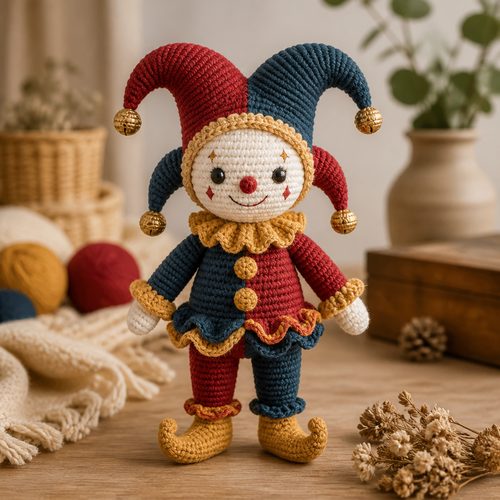
Jester Amigurumi Crochet Pattern, $4.99. Instant download, A4 and US Letter.
See the pattern
How do I crochet a jester amigurumi doll?
What Is a Jester Amigurumi and Why Are They So Popular?
A jester amigurumi is a crocheted stuffed figure styled after the classic court jester, clown, or circus joker — complete with a pointed hat, bells, ruffled collar, and diamond-patterned clothing. The word 'amigurumi' comes from the Japanese words for 'knitted' (ami) and 'stuffed doll' (nuigurumi), and the craft has exploded in popularity because it transforms nearly any character into an adorable, handmade keepsake. Jester and clown designs are especially beloved because their bold color contrasts — typically red, yellow, purple, and black — make for visually striking finished pieces that photograph beautifully. They're a favorite for Halloween décor, circus-themed nurseries, carnival party gifts, and novelty collector shelves. The design's inherent whimsy also makes it one of the most requested amigurumi patterns in craft communities, sitting at the intersection of spooky, playful, and artistic.
Materials You'll Need Before You Start
To crochet a jester amigurumi, you'll need a 2.5mm to 3.5mm crochet hook depending on the yarn weight specified in your pattern — most jester designs call for DK or worsted weight yarn in at least three to four contrasting colors. You'll also need polyester fiberfill stuffing to give your doll its shape, as well as safety eyes in sizes ranging from 6mm to 12mm (the larger the eye, the more expressive and cartoon-like your jester will look). A yarn needle for weaving in ends and sewing pieces together is essential, and stitch markers will help you keep track of rounds in the magic ring construction typical of amigurumi. Optional but highly recommended: wire armature for poseable limbs, small jingle bells to attach to the hat points for an authentic jester feel, and fabric stiffener if you want the collar or hat to hold a rigid shape.
Understanding the Pattern: Key Stitches and Construction Method
Most jester amigurumi patterns are worked in continuous rounds using the magic ring (also called magic circle) method, which creates a seamless, tight center for each body part — head, torso, arms, legs, and hat points are all made this way. The foundation stitches you must be comfortable with are single crochet (sc), increases (2 sc in one stitch), and decreases (sc2tog or invisible decrease), which is how amigurumi achieves its three-dimensional rounded forms. A jester pattern specifically will also include color changes worked mid-round to create the signature diamond or checkerboard body pattern, so practice carrying yarn cleanly along the inside of your work to avoid loose floats. The assembly order typically goes: stuff and close the head, then attach the torso, then sew on limbs, and finally construct and attach the multi-pointed hat with its little bells. Reading the pattern carefully before you begin — especially the section on color placement — will save you from having to frog (unravel) and redo sections once you're deep into the build.
Where to Get a High-Quality Jester Amigurumi Pattern PDF
The fastest and most affordable way to get started is to purchase a digital PDF pattern, which you can download instantly and print or reference on any device — no shipping, no waiting. Craftuary offers a Jester Amigurumi Crochet Pattern PDF Digital Download that includes full written instructions, stitch counts per round, and assembly guidance for the complete doll including hat, collar, and costume details. Digital patterns in this style are typically priced between $5 and $7, making them an incredibly accessible way to add a show-stopping piece to your project queue without the cost of a physical book. When evaluating any PDF pattern, look for ones that include a finished size reference, a materials list, a difficulty rating, and ideally a photo of the completed doll from multiple angles. A well-written digital pattern will also note whether it's designed for beginners or intermediate crafters, since jester amigurumi with multi-point hats and color-work bodies do require some prior amigurumi experience to execute cleanly.
Tips for Nailing the Jester's Signature Look
The most recognizable element of any jester amigurumi is the multi-pointed hat, and getting those points to stand up requires tight, consistent tension throughout — if your stitches are too loose, the points will flop rather than spike. Stuff each hat point very firmly with fiberfill before closing it, and consider running a small length of pipe cleaner or floral wire through the center to add structure without adding visible bulk. For the color-change body, blocking your finished doll with a light mist of water and letting it dry flat can significantly sharpen the diamond pattern edges and even out any tension inconsistencies between color sections. The ruffled collar is often the trickiest part: it's typically made by working increases rapidly around a chain loop, so working into every stitch and adding a picot edge gives it the proper ruffled, layered appearance. Finally, the placement of the safety eyes makes an enormous difference in personality — eyes set slightly closer together and angled inward give a mischievous joker look, while eyes set wide and level read as more clownish and friendly.
Creative Variations: From Halloween Clown to Circus Performer
One of the great joys of working from a PDF pattern is that you own it forever and can adapt it across multiple projects with different color stories. A Halloween version works beautifully in black, orange, and purple with a slightly menacing eye placement and no bells on the hat — leaning into the 'creepy clown' aesthetic that's perennially popular in October. A circus-themed variation in bright red, gold, and white reads as a cheerful vintage performer and makes an excellent gift for children or a nursery accent. You can also scale the pattern up or down by changing hook and yarn size: using chunky yarn with a 5mm hook produces a large, huggable 12-inch doll, while fingering weight yarn and a 1.75mm hook yields a tiny ornament-sized jester perfect for hanging on a Christmas tree or attaching to a gift. Adding embroidered rosy cheeks with a single strand of pink yarn, or hand-stitching a tiny smile with a curved backstitch, personalizes your doll in ways no mass-produced toy can replicate.
Key Takeaways
- A jester amigurumi is crocheted in continuous rounds using the magic ring method, with separate pieces for head, body, limbs, and hat assembled at the end.
- You'll need DK or worsted weight yarn in 3–4 contrasting colors, a 2.5–3.5mm hook, safety eyes, polyester fiberfill, and a yarn needle.
- Color-change mid-round work creates the signature diamond pattern on the jester's body — practice carrying yarn cleanly to avoid loose floats.
- PDF digital download patterns (available for ~$5–7 at shopcedarcompass.com from Craftuary) give you instant access and permanent reuse rights for multiple color variations.
- Firmly stuffed hat points, tight tension, and strategic safety eye placement are the three biggest factors in achieving a polished, professional-looking finished doll.
- The same base pattern adapts easily into Halloween clown, vintage circus, and holiday ornament variations simply by changing yarn color and scale.