How to Sew Toddler Pants at Home: A Beginner's Guide to PDF Sewing Patterns (Sizes 6M–5T)

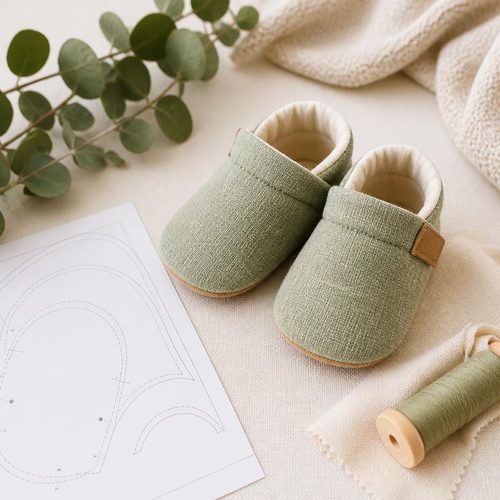
Baby Slipper Shoes Pattern, $4.99. Instant download, A4 and US Letter.
See the pattern
What is the easiest sewing pattern for toddler pants, and how do I use a PDF pattern at home?
Why Sewing Your Own Toddler Pants Is Worth It
Store-bought toddler pants rarely fit well across the waist and inseam at the same time — a common frustration for parents of slim or chunky toddlers alike. When you sew your own, you control the fabric, the rise, and the elastic tension, which means pants that actually stay up during a full day of play. PDF sewing patterns have made home sewing dramatically more accessible: you download the file instantly, print it at home or at a copy shop, and you can reuse the pattern as many times as you like. For beginners especially, a well-drafted toddler pants pattern is one of the fastest confidence-builders in garment sewing because pants involve simple seams, no collar or zipper, and a forgiving elastic waistband. The investment of a few dollars and an afternoon yields handmade clothing that lasts far longer than fast-fashion equivalents and can be passed down or gifted.
Understanding the Size Range: 6 Months Through 5T
A pattern spanning 6M to 5T covers nearly five full years of a child's growth, making it one of the most cost-effective pattern purchases a sewing parent can make. In standard US children's sizing, 6M fits infants around 12–17 lbs and 26–27 inches tall, while 5T typically fits children around 40–44 lbs and 42–44 inches tall. Most multi-size PDF patterns print all sizes nested together on the same sheet, so you trace or cut the line for the size you need and keep the original intact for future use — meaning the same download works from baby through kindergarten. When a child is between sizes, it is common practice to cut the waist in one size and blend to a larger size at the hip or inseam, a technique called 'grading between sizes' that is easier to learn on pants than on any other garment. Always compare the pattern's finished measurements or ease chart against your child's actual measurements rather than relying on age labels, since toddler sizing varies significantly by brand and country.
A0, A4, and Letter Format: What They Mean and Which to Print
PDF sewing patterns are offered in multiple page formats because printers and print shops vary around the world, and choosing the right format saves you tape and assembly time. Letter format (8.5 × 11 inches) is the standard US home printer size — the pattern tiles across many pages that you cut and tape together, which is free to print but takes 20–40 minutes to assemble for a full garment. A4 (210 × 297 mm) is the equivalent standard in Europe, Australia, and most of Asia, so if you own a non-US printer, use this version to avoid scaling errors that can throw off your measurements by several percent. A0 (841 × 1189 mm) is a large-format sheet typically printed at a print shop, office supply store, or FedEx/Kinkos for roughly $3–6 USD — it prints the entire pattern on one or two sheets with no assembly required, making it the fastest and most accurate option for repeat use. If you sew often, printing one A0 copy and tracing pattern pieces onto Swedish tracing paper or medical exam paper is the professional approach that protects your master copy indefinitely.
Best Fabrics for Beginner Toddler Pants
For a first pair of toddler pants, jersey knit or French terry are the most forgiving fabrics because they don't fray, they have natural stretch that accommodates wiggly kids, and they require no pressing skill. Cotton jersey (the fabric most T-shirts are made from) is widely available, machine washable, and comes in endless prints — look for at least 50% stretch in both directions for a pull-on pants pattern with an elastic waistband. French terry has a looped backing that adds warmth without bulk, making it ideal for fall and winter toddler pants. Woven fabrics like quilting cotton or linen can also work beautifully for a structured, relaxed trouser silhouette, though they require clean seam finishing (a serger or zigzag stitch) to prevent fraying at the edges. Avoid slippery fabrics like satin or rayon challis until you have a few pairs under your belt, as they shift during cutting and sewing and turn a beginner-friendly project into a frustrating one.
Step-by-Step Overview: How a Beginner Sews Toddler Pants
Once your pattern is printed, assembled, and cut, trace your child's size onto fabric folded right-sides together and cut two identical pant leg pieces plus a waistband or casing, depending on the pattern design. Sew the inseam of each leg first — this is the curved seam that runs from the ankle up to the crotch — using a straight stitch on wovens or a narrow zigzag on knits, with a 3/8 to 5/8 inch seam allowance as indicated by your pattern. Turn one leg right-side out, slide it inside the other leg (both now right-sides facing), and sew the crotch seam in one continuous curve from front waistband to back waistband — this single seam is what joins both legs into a pant shape. Fold and sew the waistband casing, leaving a 1.5-inch opening, then thread 3/4-inch or 1-inch elastic through with a safety pin, overlap the ends by one inch, stitch them together, and close the opening. Hem the ankles with a double-fold hem or serged edge, press lightly if using wovens, and the pants are complete — a practiced beginner can finish a pair in 60 to 90 minutes.
Tips for Getting the Perfect Fit on Active Toddlers
The most common fit problem with toddler pants is a drooping back rise — this is fixed by adding 1/2 inch to the back crotch seam length before cutting, a quick adjustment that keeps pants up even when a toddler is crouching or climbing. For children with a slim build, cut one size smaller at the waist and use narrower elastic, then rely on the elastic tension rather than the waistband casing size to hold the pants up. If the finished inseam is too long, simply turn up the hem or add a cuff — folded cuffs are a charming design detail that also adds growing room so the child can wear the pants an extra season. When sewing for a child you can't easily measure (for a gift, for example), a height-based size guide is more reliable than a weight or age guide because pant length is the hardest dimension to adjust after sewing. Prewash your fabric before cutting at the same temperature you plan to wash the finished garment, or you risk the pants shrinking 5–10% and becoming unwearable after the first laundry.
Download the Pattern from Craftuary
The Craftuary Toddler Pants Sewing Pattern PDF is available as an instant digital download from our shop, priced accessibly so you can make a pair for every season. The pattern file includes all three format options — A0, A4, and US Letter — in a single download, along with a illustrated instruction booklet written specifically for beginners who may be attempting garment sewing for the first time. A print-and-measure test square is included on the first page so you can verify your printer scaling before cutting into fabric, preventing the most common source of sizing errors. Once purchased, the file is yours to download and use indefinitely — no subscriptions, no expiration — and you can make as many pairs as you like for personal use or as gifts. Visit the listing at shopcedarcompass.com or search 'Cedar Compass toddler pants pattern' at shopcedarcompass.com to purchase and download instantly.
Key Takeaways
- A PDF toddler pants pattern in sizes 6M–5T covers nearly five years of a child's growth from a single purchase.
- US Letter format tiles across home printer pages; A0 prints at a copy shop on one or two sheets with no assembly — both are included in one download.
- Jersey knit and French terry are the best beginner fabrics for toddler pants because they don't fray and stretch forgivingly.
- Always compare pattern finished measurements to your child's actual measurements rather than relying on age sizing labels.
- The crotch seam is the single most important seam in pants construction — sewing inseams first, then joining legs for the crotch, is the correct beginner sequence.
- Adding 1/2 inch to the back rise is the most reliable fix for pants that sag or fall down on active toddlers.
- Prewash fabric before cutting to prevent post-sew shrinkage, especially with knit fabrics that can shrink 5–10%.