How to Crochet a Seamless Top-Down Shell Stitch Cardigan in Sizes XS–5X

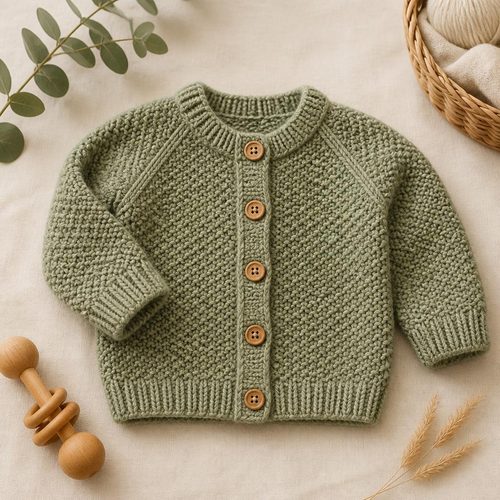
Moss Stitch Baby Cardigan, $4.99. Instant download, A4 and US Letter.
See the pattern
How do you crochet a seamless top-down cardigan using shell stitch?
What Is a Top-Down Seamless Crochet Cardigan?
A top-down seamless crochet cardigan is constructed starting at the neckline and worked downward in a single continuous piece, eliminating the need to seam separate panels together at the end. This method is popular because it allows you to try on the garment as you go, making fit adjustments in real time rather than discovering problems after hours of finishing work. The yoke — the upper section covering the shoulders and chest — is typically worked in joined rounds or flat rows with increases placed at raglan points to shape the armhole openings naturally. Once the yoke reaches the desired depth, the sleeve stitches are placed on hold while the body continues downward, and sleeves are worked afterward by picking up those held stitches. The result is a polished, professional-looking garment with virtually no sewing and clean interior structure.
Why Shell Stitch Is Ideal for Cardigan Construction
Shell stitch consists of multiple double crochet stitches worked into a single base stitch or space, creating a fan-shaped cluster that fans outward and produces a graceful, lacy texture with excellent drape. Because shell stitch has natural visual rhythm — alternating clusters with chain spaces — it lends itself well to garments where fabric movement matters, such as open-front cardigans worn over layered outfits. The stitch pattern is also forgiving of minor gauge variation, since the open spaces between shells give the fabric flexibility to stretch gently across the body. Shell stitch works at a moderate pace: it is faster than dense solid stitches like single crochet, yet it creates a fabric with enough body to hold its shape over the shoulders without slouching. On a cardigan specifically, shell stitch along the hemline and cuffs creates a naturally scalloped edge that requires no additional border work, saving finishing time.
How Top-Down Construction Actually Works, Step by Step
The pattern begins with a foundation chain sized to fit around the back of the neck, which is then worked back and forth (or in the round, depending on the design) with increase stitches placed at four raglan points: both front-to-sleeve joins and both sleeve-to-back joins. Every right-side row, you add stitches at each of these four markers, which causes the yoke to grow both wider and deeper simultaneously. After completing the yoke to the underarm depth — typically measured by trying the piece on or using schematic measurements — you separate the sleeve stitches onto stitch holders or scrap yarn and join the fronts directly to the back across the underarm gap using a small number of chain stitches. The body then continues downward in one flat or joined piece, and the shell stitch pattern is introduced at the transition from yoke to body for maximum visual impact. Sleeves are finished last by returning to the held stitches, picking up a few additional stitches at the underarm chain, and working downward toward the cuff, tapering with decreases as needed.
Understanding the Size Range: XS Through 5X
A pattern spanning XS through 5X typically covers finished bust measurements from approximately 30 inches up to 60 inches or beyond, requiring careful grading at every single increase point, stitch repeat, and schematic measurement. Inclusive sizing is not simply scaling a small sample up — a well-drafted plus-size garment adjusts the sleeve cap height, yoke depth, and waist shaping proportionally so the garment fits correctly across the shoulders and underarms regardless of size. Shell stitch patterns add an additional challenge for size grading because the stitch repeat must remain intact across all sizes; a size 5X with more stitches must still land on a complete shell repeat at every transition point. Look for patterns that list both finished garment measurements and ease recommendations for each size, since positive ease (wearing the garment 2–4 inches larger than your actual bust) is the standard fit for relaxed cardigans. Craftuary's cardigan pattern includes full schematic diagrams for each size so you can compare finished dimensions against your own measurements before beginning.
Materials and Tools You Will Need
For a shell stitch cardigan at standard worsted weight, you will typically need between 800 and 2,200 yards of yarn depending on your size, with larger sizes naturally requiring more yardage — always purchase an extra skein as a buffer. The recommended hook size for worsted weight shell stitch is usually a US size J (6.0mm) or K (6.5mm), though your personal gauge swatch is the only reliable way to confirm the correct hook for your tension. You will also need stitch markers (at least four locking markers for the raglan points), a tapestry needle for weaving in ends, and scrap yarn or a long circular needle to hold sleeve stitches while you work the body. A flexible tape measure is essential for checking your yoke depth against the schematic as you work, especially since top-down construction is all about making adjustments before you commit to the separation row. If you plan to work the sleeves in the round, a set of double-pointed needles or a long circular needle used magic-loop style will make working the tapered sleeve tubes much more comfortable than flat rows and seaming.
Gauge and Swatching: Why It Matters More for Garments
Gauge determines the finished size of your cardigan more than any other single factor, and a difference of even half a stitch per inch can result in a finished garment that is four to six inches off in the bust — enough to change two full sizes. To swatch for shell stitch, work a flat square of at least six inches using the pattern's shell repeat, block it the same way you plan to block the finished garment, and then measure the stitch and row counts in the center of the swatch (not at the edges, which are distorted). If your gauge is too tight — meaning you have more stitches per inch than the pattern calls for — try moving up one hook size and swatching again. If your gauge is too loose, go down a hook size. It is also worth noting that shell stitch gauge can shift slightly as your tension relaxes over a longer project, so some crocheters make a note of their swatch gauge and check their work again after completing the yoke section.
Finishing Touches: Blocking and Care
Blocking a crocheted cardigan — wetting it thoroughly, gently pressing out excess water, and pinning it to finished measurements on a foam mat to dry — is what transforms a hand-crocheted piece from looking homemade to looking handcrafted. Shell stitch opens up dramatically when wet-blocked, allowing the fan shapes to spread to their full width and the chain spaces to become more defined and lacy. Pin the cardigan to your schematic measurements for the size you made, paying special attention to the shoulders, front bands, and hem, and allow it to dry completely flat before unpinning, which can take 24 hours or more depending on your yarn fiber. For natural fibers like wool or cotton, hand washing in cool water with a gentle soap and laying flat to dry will help the garment maintain its shape over time. Acrylic yarns can also be blocked using the steam method — holding a steam iron a few inches above the surface without pressing — which relaxes the fibers and sets the stitch pattern without the risk of melting.
Where to Get the Pattern
The Crochet Cardigan Pattern featuring shell stitch, top-down seamless construction, and sizing from XS through 5X is available as an instant-download PDF from Craftuary at $14.39. After purchase, you receive the PDF immediately at shopcedarcompass.com's digital delivery system — no waiting for shipping, and no physical item to misplace. The pattern is formatted for easy at-home printing as well as reading on a tablet or laptop, with clear stitch counts for each size listed in brackets throughout the pattern so you always know which number to follow. Craftuary specializes in premium digital downloads across categories, and all patterns are written with consistent formatting, schematic diagrams, and step-by-step instructions suitable for intermediate crocheters comfortable with double crochet and basic shaping. If you have questions after purchase, you can reach Craftuary by email at hello@shopcedarcompass.com for pattern support.
Key Takeaways
- Top-down seamless construction allows real-time fit adjustments and eliminates sewing panels together at the end.
- Shell stitch creates natural scalloped edges at hems and cuffs, reducing the need for separate border work.
- The pattern covers sizes XS through 5X with full schematic diagrams for each size.
- Gauge swatching in shell stitch repeat before starting is essential — a half-stitch difference per inch can shift finished size by 4–6 inches.
- Wet blocking shell stitch opens the fan shapes fully and gives the finished cardigan a polished, professional appearance.
- The PDF pattern is available as an instant digital download from Craftuary for $14.39.