How to Crochet a Flower Lace Maxi Dress: The Confident Beginner's Complete Guide
Crocheting from someone else's pattern? Check its stitch counts free before you start.
Can a confident beginner crochet a flower lace maxi dress?
The Short Answer: Yes, a Confident Beginner Can Crochet a Lace Maxi Dress
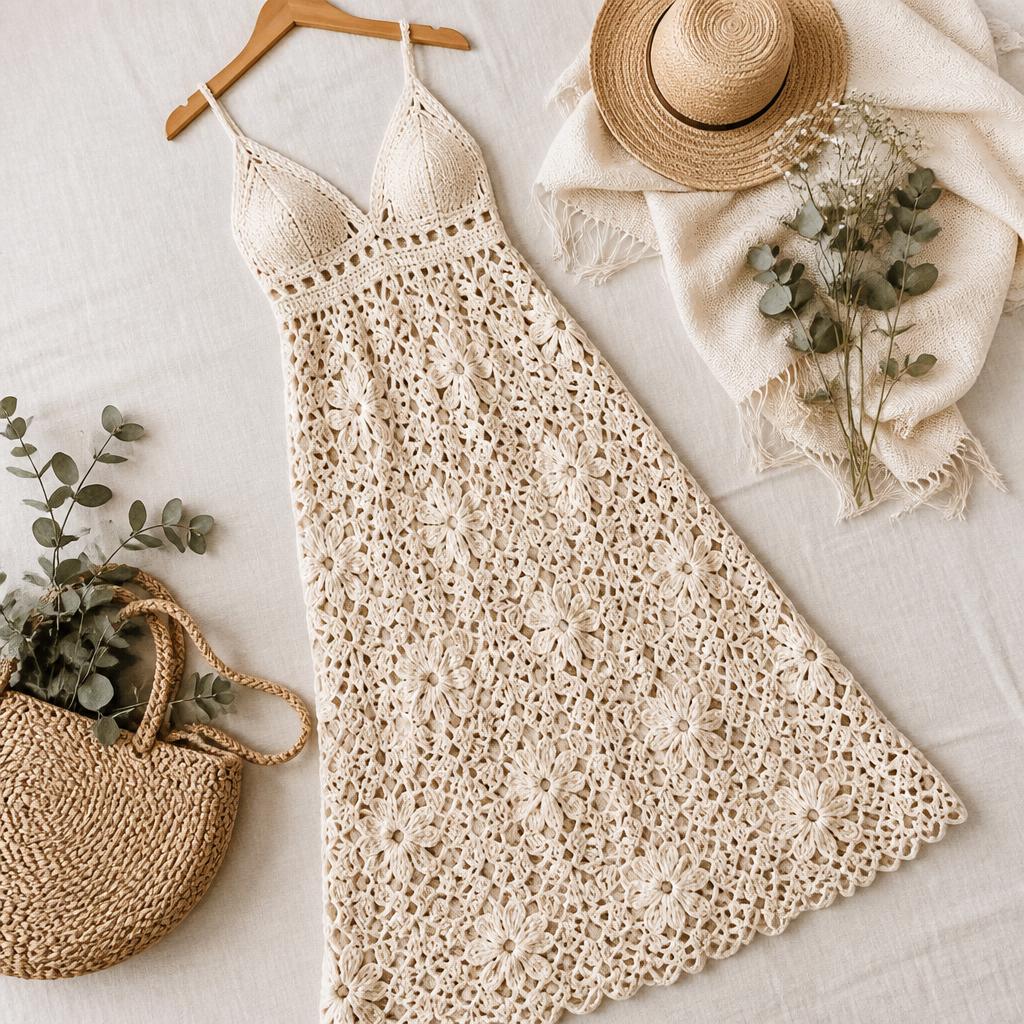
If you already know how to work chain stitches, single crochet, double crochet, and crochet in the round, you have every technical skill a flower lace maxi dress requires — no advanced techniques needed. The lace repeat looks intricate in finished photos, but it is built entirely from those same foundational stitches arranged in a repeating sequence that quickly becomes rhythmic once you have worked through it a few times. The length of a maxi dress adds time to the project, not complexity: you are essentially working the same stitch panel repeatedly until you reach the desired measurement. What separates a beginner-friendly lace pattern from a frustrating one is documentation — specifically, whether the pattern charts and writes out every row of the lace repeat so you are never guessing what comes next. With a well-written pattern that includes both written row-by-row instructions and a stitch diagram, a confident beginner has everything needed to finish a wearable, beautiful garment.
What Stitch Skills You Actually Need Before You Start
The core techniques this project requires are chain stitch, single crochet, double crochet, and the ability to join rounds and maintain an even stitch count when working in the round. You do not need post stitches, bobbles, colorwork, or any other intermediate technique — the flower lace effect comes entirely from the arrangement of basic stitches and chain spaces, not from complex stitch construction. The lace panel itself is typically worked flat in rows rather than continuously in the round, which means even crafters who find circular construction intimidating will spend the majority of the project working back and forth in familiar flat-row format. The one genuinely new skill this project may introduce is reading a crochet stitch diagram: a visual chart where symbols represent each stitch type and their position in the fabric. Because quality patterns include both a written version and a diagram, you can follow whichever format is clearer to you and cross-reference the other whenever you get confused — this dual-format approach is the single biggest factor in making lace accessible to beginners.
Choosing the Right Yarn for a Crochet Lace Dress
Fingering weight yarn — also called sock weight — is the standard choice for crochet lace garments because it creates the airy, draping quality that makes lace fabric look elegant rather than stiff or heavy. For a maxi dress in this style, plan on approximately 1,000 to 1,400 yards of yarn depending on your size: smaller sizes (XS–L) typically need closer to 1,000 yards, while extended sizes (1X–3X) will require up to 1,400 yards. Fiber content matters enormously for a skin-contact garment: a plant-based yarn like cotton, bamboo, or a cotton-bamboo blend gives the dress a cool, breathable hand ideal for warm-weather wear, while a merino or merino-blend fingering weight will be softer but noticeably warmer. Avoid 100% acrylic for lace garments — acrylic does not respond well to wet blocking, which is the finishing step that opens up the lace design and produces the defined floral look seen in finished project photos. If you want to substitute a yarn not specified in the pattern, match gauge first: one inch of difference across 50 inches of fabric width is a substantial size error in a finished garment, so swatch before you commit to a full cone or skein.
How to Read and Work a Flower Lace Repeat
A flower lace repeat is a sequence of stitches — typically chains, single crochets, and double crochets arranged into petal and chain-space motifs — that tiles consistently across a row to create continuous floral texture in the fabric. In a written pattern the repeat is marked with brackets or asterisks so you know exactly where to start, what to work, and where to loop back to the beginning of the sequence. A sample flower lace row might read: *dc in next st, ch 2, skip 2 sts, (sc, ch 3, sc) in next st, ch 2, skip 2 sts; repeat from * across — every element of the flower is contained in that one bracketed unit. A stitch diagram shows the same row visually, with each symbol placed where the stitch physically sits in the fabric, making it far easier to see how the petals form and where each chain space falls relative to the row below. Before starting the dress, work a swatch of at least four full repeats across and eight rows tall: this lets you memorize the rhythm, check your gauge against the pattern's specifications, and practice the lace construction in low-stakes fabric before committing to the full garment.
Sizing and Fit: How to Choose the Right Size for a Crochet Maxi Dress
Sizing is the most frequently overlooked part of planning a crochet garment, and it matters more here than in knitting because crochet fabric has substantially less natural stretch — fit errors are very difficult to correct after the dress is finished. A well-written maxi dress pattern will include finished bust, waist, hip, and full-length measurements for every size in the pattern, along with the intended ease — the amount of extra room built into the garment beyond your actual body measurements. For a flowing lace maxi dress, positive ease of 2–4 inches at the bust is standard: enough for the fabric to drape gracefully without being clingy or restrictive. To select your size, take your actual body measurements, add the pattern's recommended ease, and match that number to the finished measurement chart — never choose a size based on a generic S/M/L label, which varies significantly between designers. If your measurements fall between two sizes, size up for the bodice, and keep in mind that a lace skirt with open chain spaces has a small degree of flexible width that a solid-stitch fabric does not.
How to Block a Finished Lace Crochet Dress
Blocking is the single finishing step that transforms a completed lace crochet project from wrinkled, contracted mesh into the open, defined floral fabric you see in finished project photographs — and for a lace garment, it is non-negotiable. The standard technique for a lace maxi dress is wet blocking: submerge the entire finished garment in cool water, gently press out the excess water without wringing or twisting, then lay it flat on a foam blocking mat and pin each point of the lace repeat into position using rust-proof T-pins. For a full-length maxi dress you will need to block in sections — complete the bodice first, allow it to dry fully, then reposition and block the skirt panels — because the complete garment is too large to lay out and pin in a single session on a standard mat. Allow 24–48 hours for each blocked section to dry completely before removing the pins; pulling pins while the fabric is still damp causes the lace to contract and the stitch definition to collapse. If you are using a plant-based fiber like cotton or bamboo, a light pass of steam over the pinned fabric can speed drying time and further set the open, crisp quality of the lace repeat.
Frequently Asked Questions About Crocheting a Lace Maxi Dress
How long does it take? For a confident beginner working fingering weight yarn, a maxi dress typically requires 40–80 hours of stitching depending on size and working speed — plan for a multi-week project, not a single-weekend make. Can I use a heavier yarn to finish faster? You can substitute sport or DK weight yarn, but you will need to re-swatch for gauge, adjust your hook size, and recalculate yardage; a heavier yarn will also reduce the airy, open quality of the lace and produce a warmer, denser fabric. Do I need to seam the bodice and skirt together? Most maxi dress constructions are worked in separate pieces and joined with a flat or mattress stitch seam — the pattern schematic will show exactly where each piece connects and in what order. Can I follow the pattern without reading the stitch diagram? Yes — because a quality pattern provides complete written row-by-row instructions alongside the chart, you can work entirely from the written text and use the diagram only as a visual reference when a particular row is unclear. Is it worth buying a pattern that includes both regular and extended sizes in a single PDF? Absolutely — paying once for a pattern file that covers XS through 3X means every person in a household or crochet group can use the same download, and it eliminates the frustration of discovering a pattern you already purchased does not include your size.
Key Takeaways
- A confident beginner who knows chain, single crochet, double crochet, and working in the round has every skill needed to complete a flower lace maxi dress.
- Fingering weight yarn in a plant-based fiber (cotton, bamboo, or a blend) is the best choice for drape, breathability, and blocking response in a lace dress.
- Always swatch at least four full lace repeats across and eight rows tall before starting the garment to memorize the repeat and verify gauge.
- Choose your size using the pattern's finished measurement chart with 2–4 inches of positive ease at the bust — never rely on generic S/M/L labels.
- Wet blocking with rust-proof T-pins is non-negotiable for lace garments and is done in sections for a maxi-length project.
- A maxi dress takes 40–80 hours to complete; a pattern with both written row-by-row instructions and a stitch diagram makes the process genuinely accessible to confident beginners.