How to Crochet a Baby Star Costume for a Newborn: Complete Pattern Guide

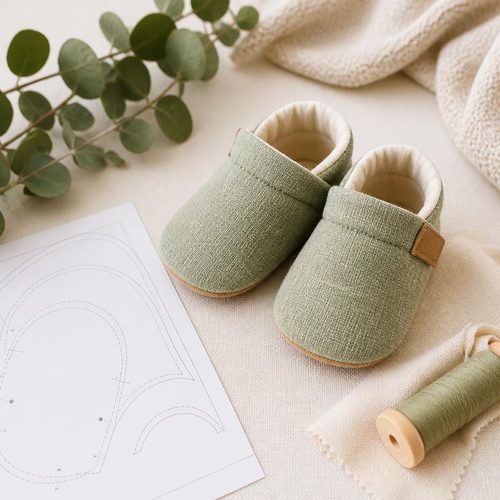
Baby Slipper Shoes Pattern, $4.99. Instant download, A4 and US Letter.
See the pattern
How do I crochet a baby star costume for a newborn?
Why a Crochet Baby Star Costume Is the Ultimate Handmade Baby Gift
A handmade crochet star costume stands apart from every mass-produced Halloween outfit or photo-prop set because it carries the texture, warmth, and intention of something crafted by hand. Newborns and infants up to six months old spend much of their time being held and photographed, making a whimsical star costume one of the most-gifted items at baby showers — it photographs beautifully against neutral backgrounds and doubles as a keepsake parents hold onto long after the baby has outgrown it. Unlike acrylic costumes from big-box stores, a crocheted version is soft against delicate skin, breathable enough for indoor photo sessions, and fully customizable in any color from classic yellow-gold to pale lavender or coral pink. Parents genuinely treasure these pieces because they cannot be found on a shelf anywhere; each one is functionally one-of-a-kind. Whether you're making it as a gift or for your own little one's first Halloween or newborn photo shoot, a crochet star costume delivers a level of charm that no retail purchase can replicate.
Materials and Tools You'll Need Before You Start
Before you begin crocheting a baby star costume, gather all your materials so the project flows without interruption. You will need approximately 200–350 yards of worsted-weight (size 4) or bulky-weight (size 5) yarn in your star color — yellow, gold, and cream are the most popular choices — along with a small amount of a contrasting color if your pattern includes facial details or decorative edging. A 5.0 mm (H/8) or 5.5 mm (I/9) crochet hook is standard for this weight range, though you should always verify your pattern's recommended hook size and adjust based on your personal tension. You'll also need a yarn needle for seaming and weaving in ends, locking stitch markers to track round beginnings, and a small amount of polyfill or fiberfill stuffing if your design calls for three-dimensional star points. For the closure — critical on baby garments for easy diaper changes — pick up a set of sew-on snaps or KAM snaps sized for knit fabric, or small buttons with buttonholes worked directly into the pattern's border.
What 'Intermediate' Skill Level Actually Means for This Pattern
When a crochet pattern is labeled intermediate, it means you should be comfortable with foundational stitches but you don't need to be an expert — you're simply ready to move beyond basic flat squares and rectangles. For a baby star costume, intermediate skills typically include working in continuous or joined rounds using a magic ring, executing clean increases and decreases to shape the body and star points, and reading a pattern that uses multiple stitch types within a single round. You'll likely encounter single crochet (sc), half double crochet (hdc), and possibly double crochet (dc) in combination, as well as the invisible decrease technique that gives each star point its neat, tapered tip. Seaming separate pieces — such as attaching star-point panels to the sides of a body piece — is also an intermediate technique that a well-written pattern will walk you through with clear stitch counts. If you've successfully completed a crocheted baby hat, a small amigurumi figure, or a granny-square panel, you have more than enough experience to tackle this costume confidently.
Getting the Sizing Right: Newborn Through 6 Months
Baby sizing in crochet is almost entirely governed by gauge, so the single most important step before you start the costume body is crocheting a gauge swatch in your chosen yarn-and-hook combination and measuring it carefully against the pattern's stated gauge. A standard newborn size targets a chest circumference of roughly 35–38 cm (14–15 inches) and a shoulder-to-crotch length of about 28–30 cm (11–12 inches), while the 3-month size generally adds 2–3 cm in each direction, and the 6-month size adds another 2–3 cm beyond that. If your swatch produces more stitches per inch than the pattern calls for, move up one hook size; if it produces fewer, move down one hook size — even a half-stitch difference compounds dramatically over a full garment. Many crocheters also take the baby's actual chest measurement when gifting, using that number as the primary target and treating the labeled age size as a secondary guide. Because babies grow so quickly, making the 3-month size when the recipient is a newborn is a practical and widely used strategy — it extends wearable life by several weeks while still fitting a small infant with a slight tuck.
How the Star Costume Comes Together: Construction Overview
Most crochet baby star costumes are built using one of two approaches: a top-down seamless construction that works the body and pointed panels in one continuous piece, or a modular approach that crochets the body separately and then seams the star points on afterward. In the modular method — common at the intermediate level — you begin with the costume body, working in the round from the top of the shoulders down to the crotch opening and shaping armholes and the neckline with strategic increases and decreases as you go. The five star points are then crocheted individually as flat or lightly stuffed triangular panels and attached symmetrically around the body at the shoulders, hips, and sometimes the center back to create the recognizable star silhouette. A coordinating star-shaped hat or halo headband is typically included in the pattern as well, crocheted flat in a five-pointed star shape and then edge-finished to hold its form. The costume closes at the bottom with a snap placket, button band, or simple tie, allowing caregivers to manage diaper changes quickly without removing the entire garment.
Tips for a Clean, Safe, and Photo-Ready Finish
Because this costume will be worn by a baby, safety and comfort must guide every finishing decision from the first stitch to the last. Avoid any embellishments — buttons used decoratively, glued rhinestones, or sewn-on plastic eyes — that could come loose and become a choking hazard; if your star includes a face or decorative detail, use embroidered satin stitches in contrasting yarn instead. Weave in all yarn ends at least two to three inches long and work them in two opposing directions to prevent unraveling, since baby garments endure frequent washing. Blocking the finished costume by misting it lightly with water and pinning the star points into their five-pronged shape while drying will dramatically sharpen the costume's silhouette — this single 30-minute step transforms a lumpy work-in-progress into a polished, photo-ready piece. Choose a machine-washable yarn such as superwash wool, cotton, or a cotton-acrylic blend so parents can launder it without worry, and include a small card with washing instructions when gifting the finished costume.
Where to Download the PDF Pattern
The PDF pattern for this Crochet Baby Star Costume — sized for newborn through 6 months — is available as an instant digital download from Craftuary at shopcedarcompass.com. Once your purchase is complete, we deliver the PDF directly to your account's downloads folder and to the email address on file, so you can begin working immediately with no shipping wait. The pattern is priced at $11.61 and includes written round-by-round instructions, stitch counts for each size, and sizing notes to help you navigate gauge adjustments with confidence. As a PDF, you can print as many personal-use copies as you need, highlight key rounds, make handwritten notes in the margins, and keep a permanent digital backup on any device. If you are shopping for a last-minute baby shower gift and want to give something handmade and memorable, purchasing and printing this pattern today gives you everything you need to start crocheting the costume the same evening.
Key Takeaways
- A crochet baby star costume PDF pattern sized for newborn through 6 months is available as an instant digital download for $11.61 from Craftuary.
- The pattern is rated intermediate, requiring comfort with magic rings, working in the round, and clean increases and decreases.
- Worsted-weight (size 4) or bulky-weight (size 5) yarn and a 5.0–5.5 mm hook are the standard materials needed for this project.
- Crocheting a gauge swatch before starting is essential — even a half-stitch-per-inch difference significantly alters the finished size on a baby garment.
- Star points are typically crocheted separately and seamed onto the costume body, with a coordinating star hat or headband included in the full pattern.
- All decorative details on a baby costume should be embroidered rather than attached as separate pieces to eliminate choking hazards.
- The PDF is delivered instantly at shopcedarcompass.com after purchase and can be printed at home or stored digitally on any device for repeated reference.
- Making the 3-month size when gifting to a newborn is a widely used strategy that extends the wearable life of the costume by several weeks.