Baby Farm Animals Crochet Pattern Bundle: What's Included, What You Need, and Whether It's Worth Buying

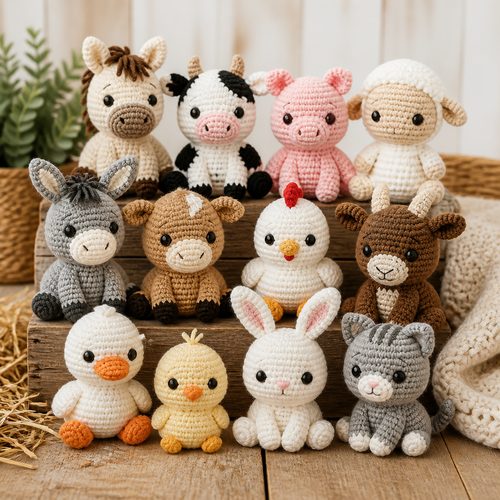
Baby Farm Animals 12in1, $4.99. Instant download, A4 and US Letter.
See the pattern
What should a baby farm animal crochet pattern bundle include, and is it worth buying over individual patterns?
What Animals Are Typically Included in a 12-in-1 Farm Animal Bundle
A well-designed 12-in-1 baby farm animal crochet bundle covers the full cast of classic barnyard characters — chicks, piglets, lambs, calves, bunnies, ducks, horses, roosters, goats, donkeys, cows, and sheep are the most common lineup. Each pattern in the bundle should represent a genuinely distinct animal with its own unique shaping notes, so you are not simply recoloring the same base template twelve times. Quality bundles present every animal in a cohesive 'baby' or chibi style — oversized heads, simplified limbs, and consistent safety-eye sizing — so all twelve pieces look intentional and professionally matched when displayed together. The best bundles also include at least one or two visual anchor animals, like a fluffy lamb or a spotty cow, that photograph beautifully for gifting, nursery décor, or craft fair booth displays. Confirming which animals are in the set before purchasing ensures the bundle matches your specific project goal, whether that is a complete farm diorama, a baby shower gift basket, or a themed nursery mobile.
What Skill Level Do You Need to Crochet Baby Farm Animals?
Most baby farm animal amigurumi patterns are designed for confident beginners to intermediate crocheters — you should be comfortable working in the round with a magic ring, increasing and decreasing stitches, and sewing finished pieces together neatly. If you can single crochet, slip stitch, and use a stitch marker to track your rounds without losing count, you already have every technical skill the majority of these patterns require. The 'baby' chibi style actually works in the crocheter's favor: rounder, more simplified shapes need fewer advanced techniques than realistic amigurumi, and the lower stitch count per piece means most animals can be finished in a single two-to-four-hour crafting session. Beginners should start with the simplest animal in the set — typically a round chick or a basic piglet body — to calibrate their tension before moving on to more complex pieces with multiple assembled parts, such as a horse with legs and mane or a rooster with a comb. A well-written pattern bundle includes stitch counts for every round, assembly photo guides for the trickiest joins, and clear safety-eye sizing recommendations so even a first-time amigurumi maker can produce a polished, gift-ready result.
What Materials and Yarn Do You Need for Baby Farm Animal Amigurumi
Baby farm animal amigurumi are almost universally worked in DK or worsted weight yarn paired with a 2.5mm to 4.0mm crochet hook — the tighter your gauge, the more solid the fabric and the less polyfill stuffing will poke through the stitches. For a complete set of twelve animals, plan on 50–100 grams each of your main colors (white, tan, pink, yellow, brown, and black) and small accent skeins for details like spots, snouts, combs, and hooves. Polyfill toy stuffing and black safety eyes — typically 6mm for fine details and 9mm for the main eye placement — are the two non-negotiable notions you will need in quantity, so buying them in bulk before you begin lowers your per-animal cost considerably. Chenille or velvet yarn is a popular upgrade for lambs and bunnies where texture adds tactile realism, but standard acrylic works beautifully across the entire set without any pattern modifications. If you are making these animals as gifts for babies or young children, choose a machine-washable acrylic or cotton yarn and verify that every safety eye is secured with a locking washer rated for the yarn weight you are using, since undersized washers can fail on thick fabric.
Bundle vs. Individual Patterns: Is a 12-in-1 Pack the Better Value?
Purchasing a 12-in-1 crochet bundle almost always delivers a dramatically lower cost per pattern compared to buying individual animal designs separately — on Etsy, single amigurumi patterns typically retail between $3 and $6 each, meaning twelve individual purchases would cost $36–$72 in total. A bundled PDF priced around $12–$13 (consistent with current market rates in the farm animal amigurumi niche) brings the per-pattern cost down to roughly $1, which is exceptional value even before accounting for the cohesive visual aesthetic that makes the finished set look intentional rather than assembled from mismatched sources. Beyond price, bundles save meaningful time: there is no hunting across twelve different shops or managing twelve separate PDF downloads, and all patterns in a single bundle share the same abbreviation conventions and gauge assumptions, so there is no adjustment period when you move from one animal to the next. The primary trade-off is selectivity — if you genuinely only want two or three specific animals, individual patterns may be the more practical choice — but for anyone planning a full farm set for a nursery, baby shower, or holiday craft fair table, the bundle wins on almost every dimension. Look specifically for bundles that include a consolidated master materials list covering all twelve animals at once, which eliminates the need to cross-reference twelve separate supply sections before your first trip to the craft store.
How to Work Through a 12-Pattern Bundle Without Overwhelm
The most effective strategy for a multi-pattern bundle is to finish one animal completely — including stuffing, assembly, and any embroidered details — before casting on the next piece, rather than crocheting all the bodies first and leaving assembly as a separate marathon session. This finish-one-move-to-next approach keeps motivation high because you get a tangible, displayable finished object every one to four hours, and it prevents the common stall point of a growing pile of unstuffed parts that feels impossible to tackle later. Before you begin, sort all twelve patterns by complexity: work through the three or four simplest animals first to dial in your tension and establish a consistent gauge, then tackle the more involved designs like the horse or the rooster once your hands are already in a confident rhythm. If you are making the full set as a gift with a deadline, a loose production schedule of two animals per week gives you a comfortable six-week runway to complete all twelve without rushing the final embellishments or seaming. Photograph each finished animal individually against a simple neutral background before starting the next — this builds a progress gallery that doubles as ready-to-share content for Ravelry, Instagram, or any craft community where you document your makes.
Frequently Asked Questions About Baby Farm Animal Crochet Bundles
Can I sell finished crocheted items made from a purchased pattern bundle? Most Etsy pattern sellers explicitly permit buyers to sell hand-crocheted finished objects, but you should always read the specific license terms included in your PDF download before listing anything for sale, as terms vary by designer. What file format are the patterns in? Virtually all digital crochet bundles sold on Etsy are delivered as PDF files you can print, annotate, or view on any device with a free PDF reader — no special software is required and the files are typically available for immediate download after purchase. Can I resize the animals by changing my yarn weight? Yes — swapping to a thicker yarn and larger hook scales each pattern up proportionally, while a finer yarn and smaller hook produces a miniature version; the stitch counts remain identical and the shapes stay proportionally accurate. How long does each animal realistically take to complete? Most beginner-to-intermediate crocheters finish a single baby farm animal in two to four hours of focused work, putting the full twelve-animal set within reach over two to three weekends of crafting. Is a bundle like this a good gift for a new crocheter? Absolutely — a multi-pattern bundle gives a beginner a clear, structured project roadmap with built-in progression from simple to complex, and the universally appealing farm animal theme produces finished objects that feel rewarding to give and display.
Key Takeaways
- A 12-in-1 bundle reduces cost per pattern to roughly $1 versus $3–$6 for individual Craftuary patterns, saving up to $60 on a complete farm set
- Baby-style amigurumi are ideal for confident beginners who can work in the round, increase and decrease, and sew pieces together neatly
- Core materials are DK or worsted yarn in six main colors, polyfill stuffing, and 6mm–9mm black safety eyes — all available in bulk to reduce per-animal cost
- Finishing each animal completely before starting the next prevents project stall and keeps motivation high across a 12-piece set
- All patterns in a single bundle share abbreviation conventions and gauge assumptions, eliminating adjustment time between animals
- Most pattern licenses allow selling finished hand-crocheted items made from the purchased PDF, making bundles viable for craft fair production