How to Knit a Baby Cardigan and Matching Hat Set: Tips, Sizing, and Yarn Advice

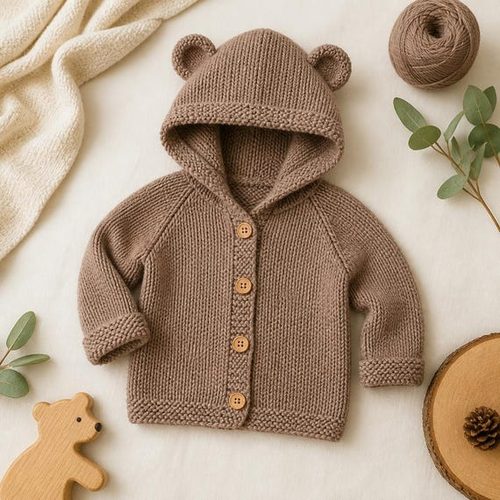
Baby Bear Hood Cardigan, $4.99. Instant download, A4 and US Letter.
See the pattern
How do you knit a matching baby cardigan and hat set?
Why Knit a Baby Cardigan and Hat as a Matching Set?
Knitting a baby cardigan and hat as a coordinated set is one of the most practical and gift-worthy projects a knitter can tackle. Because both pieces are worked in the same yarn colorway and stitch pattern, they look intentional and polished — far more impressive than two separately purchased garments. Matching sets are perennially popular at baby showers because parents can dress a newborn in a cohesive outfit from day one. From a knitter's standpoint, buying one skein of a premium baby yarn is often enough to complete both pieces, which keeps costs low and reduces yarn waste. Sets also let you practice the same techniques — ribbing, increases, decreases — twice in quick succession, which solidifies your skills efficiently.
Choosing the Right Yarn for Baby Knitwear
Baby skin is significantly more sensitive than adult skin, so yarn selection is the single most important decision you will make before casting on. Look for yarns labeled 'superwash merino,' 'baby alpaca,' or 'cotton-merino blend,' as these fibers are soft against delicate skin, machine-washable, and durable enough for repeated laundering. Avoid any yarn with a prickle rating above roughly 28 microns — a good rule of thumb is to rub the yarn against the inside of your wrist; if it scratches you, it will irritate a newborn. For weight, DK (light worsted) or fingering weight are the most common choices for baby cardigans and hats because they produce a fabric with good drape and stitch definition without being too bulky for small bodies. A typical newborn-to-3-month set in DK weight requires approximately 200–300 yards total, so one standard 250-yard skein usually covers both the cardigan and hat comfortably.
Understanding Baby Garment Sizing and Gauge
Baby sizing charts use age ranges as a starting point, but the most reliable measurement is chest circumference, since babies grow at wildly different rates. Standard size ranges for a newborn–12-month set are: Newborn (chest 14–16 in), 3 months (16–17 in), 6 months (17–18 in), and 12 months (18–19 in). For the hat, head circumference runs approximately 13–14 inches at newborn, growing to around 17–18 inches by 12 months — knitters should target about 1–2 inches of negative ease so the hat stays snug without being tight. Gauge is critical: even a half-stitch difference per inch across a 16-inch chest translates to a full inch of extra width, which can make a 3-month garment fit like a 6-month one. Always knit a gauge swatch, wash and block it before measuring, since many yarns — especially superwash wools — bloom or relax significantly after their first wet block.
Knitting the Baby Cardigan: Construction and Key Techniques
Most beginner-friendly baby cardigans are worked top-down in one piece, which eliminates the need for seaming and lets you try the garment on a small stuffed animal or measuring tape as you go. The construction typically begins with a provisional cast-on at the back neck, followed by raglan increases at four points (both shoulders and both sleeve-body junctions) every right-side row until the yoke reaches the correct depth. Once the sleeves are separated onto stitch holders, the body is worked flat or in the round down to the hem, where a few rows of ribbing or seed stitch add a tidy finish. Button bands are usually picked up along both front edges after the body is complete — picking up at a ratio of approximately 3 stitches for every 4 rows prevents the bands from pulling or flaring. Choose 4–6 small buttons (5/8 inch or smaller) in a contrasting color or a natural material like wood or shell for a premium, boutique look.
Knitting the Matching Hat: Shaping and Fit
The matching hat is typically the faster of the two pieces and makes an excellent warm-up project if you want to test your yarn and gauge before committing to the cardigan. Cast on enough stitches to achieve your target circumference at the chosen gauge, join in the round, and work 1–2 inches of k2, p2 ribbing for a stretchy, secure brim that won't pop off a wriggly infant's head. The body of the hat can be worked in stockinette, seed stitch, or a simple cable panel — whatever stitch pattern you used on the cardigan yoke — to create visual continuity between the two pieces. Crown decreases are worked by placing marker every 6–8 stitches and knitting two together before each marker every other round until roughly 8–12 stitches remain, then drawing the yarn through all live stitches and pulling tight. For a whimsical matching detail, add a small pompom, i-cord knot, or a tiny ear — a technique popularized by hooded baby sets — on top of the hat to echo any decorative elements on the cardigan.
Coordinating Stitch Patterns and Colorwork Between Pieces
The simplest way to make a set look cohesive is to repeat one signature element — a 2x2 ribbed hem, a small eyelet column, or a twisted-stitch cable — on both the cardigan cuffs and hem and on the hat brim and crown. If you want to incorporate colorwork, stranded knitting (Fair Isle) works beautifully on baby yokes and can be mirrored on the hat body with just one or two repeats of the same motif. Avoid colorwork motifs with floats longer than 5 stitches on baby garments, since long floats can catch tiny fingers and toes. For a modern, minimalist look, a tonal colorway — two shades of the same hue, such as oat and warm ivory — provides subtle visual interest without the complexity of full stranded work. If you are using a striped design, plan your stripes so they fall at the same visual weight on both pieces: wide body stripes on the cardigan paired with wide crown stripes on the hat, for example.
Finishing: Blocking, Seaming, and Adding Buttons
Blocking is non-negotiable for a professional result, even on a small project like a baby set. Wet-block both pieces by soaking them in cool water with a drop of wool wash for 15–20 minutes, gently pressing out excess water in a towel, then pinning flat to your measurements on a foam blocking board. Allow at least 24 hours of dry time before unpinning — rushing this step causes the fabric to spring back and lose the even stitch definition you worked for. If your cardigan requires seaming, use mattress stitch for side and sleeve seams because it creates an invisible, flat join that lies flush against a baby's skin without creating a ridge. Sew buttons on the left band for girls' convention or the right band for boys' convention, but honestly, most modern knitters simply match their own preference — what matters most is that buttons are sewn on securely with a thread shank and double-knotted so they cannot work loose near a baby's mouth.
Using a Digital Knitting Pattern to Get It Right the First Time
Following a professionally written pattern removes the guesswork from sizing, stitch counts, and shaping — especially for knitters who are newer to garment construction. A well-designed PDF baby cardigan and hat set pattern will include stitch counts for multiple sizes, a schematic with finished measurements, written row-by-row instructions, and often a glossary of abbreviations so you are never left guessing. Downloadable knitting patterns are available instantly after purchase, meaning you can begin swatching the same afternoon you decide to make the gift. Craftuary offers a baby cardigan and matching hat set pattern designed with exactly these features — clear sizing from newborn through 12 months, beginner-friendly top-down construction, and complete hat instructions that coordinate perfectly with the cardigan. Because it is a digital download, you receive it immediately and can print as many copies as you like, mark up your working copy, and archive a clean backup — no waiting for shipping, no lost paper patterns.
Key Takeaways
- Use superwash merino or baby alpaca yarn under 28 microns to protect sensitive newborn skin.
- DK weight yarn at correct gauge typically requires only 200–300 yards for a full newborn-to-3-month cardigan and hat set.
- Always knit and block a gauge swatch before starting — superwash yarns can grow significantly after washing.
- Top-down, one-piece raglan construction is the most beginner-friendly method for a baby cardigan and eliminates seaming.
- Repeat one signature stitch element (ribbing, cable, eyelet) on both pieces to make the set look intentionally coordinated.
- Wet-block both finished pieces and pin to measurements for a professional, even result.
- A professionally designed digital PDF pattern provides size charts, schematics, and row-by-row counts that eliminate guesswork.