How to Crochet Animal-Shaped Coasters: Crocodile, Squirrel & Lizard Amigurumi Coaster Patterns for Beginners

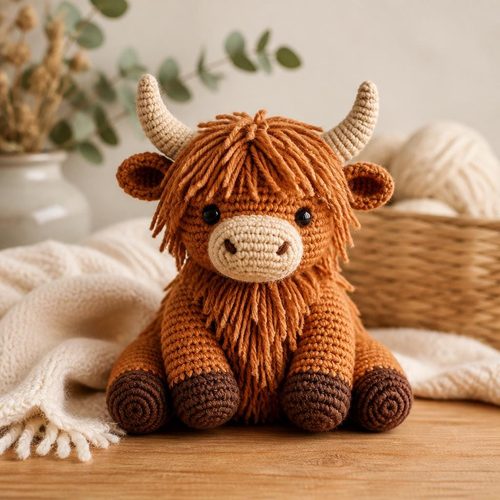
Highland Cow Crochet Pattern, $4.99. Instant download, A4 and US Letter.
See the pattern
How do you crochet animal-shaped coasters using amigurumi techniques as a beginner?
What Are Amigurumi-Style Animal Coasters (and Why Everyone Wants Them)
Amigurumi is the Japanese art of crocheting small, stuffed figures — but the same character-building techniques that give stuffed animals their personality can be applied flat to create functional coasters with faces, tails, and texture. Animal coasters occupy a perfect niche: they are genuinely useful on a desk or coffee table, but they also double as whimsical décor that sparks conversation. Unlike plain round coasters, a lizard coaster with sculpted scales or a squirrel coaster with a curled tail turns an everyday object into a handmade keepsake. The surge in popularity of cottagecore and nature-themed interiors has pushed animal crochet accessories into bestseller territory on craft marketplaces, making them an excellent project for crocheters who want to make and sell, as well as those who simply want a charming handmade gift. Because they are flat and relatively small, animal coasters are far less time-intensive than a full amigurumi plushie, making them ideal weekend projects for beginner and intermediate crocheters alike.
What's Included in the 4-Pattern Animal Coaster Bundle PDF
This digital download bundle contains four complete crochet patterns: a crocodile coaster, a squirrel coaster, a lizard coaster, and a fourth complementary animal design — all formatted as a single, print-ready PDF. Each pattern is written out in standard US crochet terminology and includes a full stitch count for every round so you can catch errors before they compound. The crocodile pattern features a textured scale stitch across the body and pointed spines along the spine edge, which are worked separately and sewn on after the base is complete. The squirrel design uses a contrast-color tail section crocheted in a fan or shell stitch to mimic the natural fluffiness, while the face details — eyes and cheek circles — are surface-applied as slip-stitched embellishments. The lizard pattern incorporates increases and short rows to create a tapered tail that curves naturally without stuffing, giving it a realistic flat silhouette perfect for sitting under a mug. All four designs are sized to fit a standard drink coaster footprint (approximately 3.5–4.5 inches at the widest point) and are designed to lay flat without curling when blocked.
Materials and Tools You Need Before You Start
For all four coasters in this bundle, you will need worsted-weight cotton yarn in at least two to three colors per coaster — cotton is strongly preferred over acrylic because it is heat-resistant, absorbent, and holds its shape after blocking. A US size G (4.0 mm) or H (5.0 mm) crochet hook works best with worsted cotton; a tighter gauge produces a sturdier coaster that won't flop when a mug is set on it. You will also need a yarn needle for weaving in ends and sewing on any separate pieces like tails or spines, a pair of small scissors, and optional safety eyes or black embroidery floss for facial features. Stitch markers are highly recommended — even experienced crocheters use them when working in continuous rounds to track the beginning of each row. If you plan to gift or sell the finished coasters, a spray bottle of water and a blocking mat will help you pin each piece to its final dimensions and eliminate any post-crochet curl before the piece dries.
How to Download and Use a Crochet PDF Pattern
After purchasing the bundle from the Craftuary shop at shopcedarcompass.com, you will receive an instant download link that delivers the PDF directly — no shipping wait, no account required beyond your Craftuary login. Open the file in any PDF reader such as Adobe Acrobat, Apple Preview, or the free browser-based PDF viewer built into Chrome or Firefox. You can print all pages at home on standard letter or A4 paper, or simply keep the file open on a tablet propped beside your work so you can scroll through the pattern without handling paper. The patterns use a row-by-row format with stitch counts in parentheses at the end of each line — for example, 'sc 6 around (6)' — so you always know how many stitches you should have after completing that step. If you are new to reading crochet patterns, take a moment to review the abbreviations key on the first page of the PDF before you begin; common abbreviations used throughout this bundle include sc (single crochet), inc (increase), dec (decrease), sl st (slip stitch), and ch (chain).
Step-by-Step: How Amigurumi Techniques Create the Animal Details on a Flat Coaster
Most amigurumi projects begin with a magic ring — a fully adjustable loop that closes to leave no hole at the center — and these coasters follow the same method, starting each design from the center and working outward in continuous spiral rounds. From the magic ring, you increase at regular intervals (typically six increases spread evenly across the round) to grow the circle while keeping it flat; this is the same mathematics behind any flat crochet circle, but the pattern specifies exactly where to place increases so the finished shape matches the animal's body outline rather than a perfect disc. Character details like the crocodile's snout or the squirrel's ear are worked as small separate pieces using just a few stitches and then whipstitched onto the main body using your yarn needle, a technique borrowed directly from amigurumi construction. Color changes, which give the lizard its belly stripe or the squirrel its chest patch, are introduced mid-round by carrying the new yarn color through the final pull-through of the stitch immediately before the color switch — the pattern notes precisely which stitch to make the change on. Once all pieces are assembled, facial features are added last: either by threading black embroidery floss through the body and tying French knots for eyes, or by pushing plastic safety eyes through the fabric and securing their washers on the inside before the last seam is closed.
Beginner Tips for Getting Professional-Looking Results
The single most impactful thing a beginner can do to improve the look of their finished coasters is to maintain even tension throughout each round — inconsistent tension creates bumpy, uneven fabric that lies flat in some spots and puckers in others. Practice crocheting a small tension swatch in your chosen yarn and hook combination before starting the first coaster; if your swatch measures smaller than expected, move up half a hook size, and if it is larger, move down. When working color changes, always carry the unused color loosely along the wrong side of the work rather than cutting and reattaching at every switch — this reduces the number of ends you need to weave in and keeps the back of the coaster tidy. Blocking is not optional for coasters: even if your crocheted piece looks slightly uneven or stiff when you finish, a thorough wet block (soak in water, squeeze out gently, pin to shape, and allow to dry fully) will even out the stitches and flatten the coaster to a professional finish. Finally, if you plan to sell your finished coasters, photograph them on a neutral wooden surface in natural light — the texture and character details read much more clearly in daylight than under warm indoor bulbs, which can flatten the dimensionality of the stitchwork.
Where to Get the Crocodile Squirrel Lizard Coaster Pattern Bundle
The four-pattern PDF bundle is available as an instant digital download from Craftuary, a curated digital goods shop at shopcedarcompass.com at shopcedarcompass.com. Because it is a digital download, you receive the full PDF immediately after purchase with no waiting period and the ability to print or re-download as many times as you need. The bundle is priced to make all four designs accessible in a single purchase — far more economical than buying individual animal coaster patterns separately, and a practical choice if you want to work through a full set or mix and match designs for gift bundles. The PDF is formatted for home printing and will look equally sharp on a tablet screen, so you have flexibility in how you reference it while you work. Customer reviews and photos from makers who have completed the set can be found directly on the product page page, giving you a real-world preview of how the finished designs look in different yarn colorways before you commit to your own palette.
Key Takeaways
- Amigurumi flat coaster techniques let beginners create functional, character-rich coasters with faces and texture in a single weekend.
- The bundle includes four distinct animal designs — crocodile, squirrel, lizard, and a fourth pattern — all in one instant-download PDF.
- Worsted-weight cotton yarn with a G or H hook is the recommended combination for heat-resistant, flat-laying coasters.
- Each pattern is written in US terminology with per-round stitch counts so errors are easy to catch early.
- A magic ring start and spiral rounds keep the center hole-free and the shape flat without needing to stuff or wire the coaster.
- Wet blocking after assembly is the single most important finishing step for a professional, curl-free result.
- The PDF delivers instantly after Craftuary purchase and can be printed at home or used on a tablet beside your work.